Concrete Repair in Seattle
Concrete cracks, spalls, and settles for predictable reasons — and the right repair depends on the cause, not just the visible damage. We diagnose what is actually failing on your patio, driveway, walkway, or basement slab, then recommend the right fix: crack injection, surface patch, full panel replacement, or leveling. Cosmetic surface fixes that don’t address the underlying cause fail again within a season or two; we are honest about which path is the right investment before any money changes hands. For worn but structurally sound slabs, see concrete resurfacing in Seattle.
Diagnosing the root cause
The visible damage is the symptom; the repair has to target the cause. A hairline shrinkage crack across a driveway looks similar to a structural crack from settling — but the first is permanent once sealed, and the second will widen within a year if subgrade or drainage isn’t addressed. Our diagnosis starts with measuring crack width, mapping the crack pattern, checking the slab for deflection under load, and tracing drainage paths around the perimeter. From that we determine whether the right answer is crack sealing, panel replacement, leveling, or full replacement.
Crack types and what they signal
Hairline shrinkage cracks (under 1/16 inch) form during the first year of cure as the slab gives up moisture. They are cosmetic, sealable, and don’t widen further. Control-joint cracks following saw-cut lines are normal — the joint did its job and concentrated the crack where designed. Wide cracks (over 1/4 inch) running across the slab usually indicate subgrade settlement or inadequate reinforcement at the time of the original pour. Cracks with vertical displacement between panels mean the soil beneath one side has eroded or compacted; leveling is needed before any surface repair will hold. Spider-web patterns near the surface are scaling from poor finishing or de-icer damage, not structural failure.
Repair methods and materials
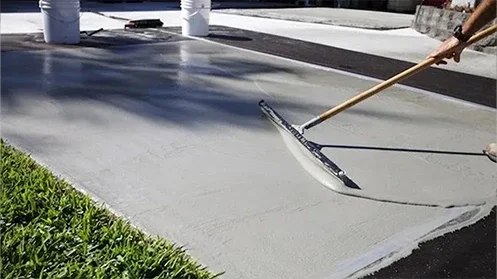
Crack sealing uses epoxy injection for structural cracks (bonds the two faces back together) or polyurethane for cracks with moisture activity (flexes with thermal movement). Surface patching uses polymer-modified mortar for shallow spalls and pop-outs. Resurfacing overlays apply a thin 1/8–1/2 inch layer of modified concrete over a sound base for cosmetic and protective renewal. Panel replacement saw-cuts and replaces individual sections — the right call when damage is isolated. Leveling raises sunken slabs with mudjacking or polyurethane foam before repair, addressing the cause rather than masking it.
When to repair vs. replace concrete
Repair makes sense when the slab is structurally sound and damage is surface-level: hairline cracks, minor spalling, small pop-outs, or discoloration. If the slab is actively settling, heaving, or cracked through at multiple points with drainage problems beneath, repair will fail again quickly - leveling plus targeted repair, or full replacement, is the better investment. Our on-site assessment tells you which path is right for your specific slab before any money changes hands.
| What you see | Best fit | Why |
|---|---|---|
| Hairline cracks, small spalls or pop-outs; slab still level | Repair (crack sealing, patching) | The slab is sound; fixing the defect keeps water out |
| Worn, scaled, or stained surface across the slab; slab still level | Resurface (overlay) | A thin overlay renews the surface without tear-out |
| Sunken or tilted sections that are otherwise intact | Lift and level, then repair | Lifting fixes the trip hazard and drainage; patching alone would fail |
| Cracked through in many places, heaving, or a failed base | Replace | The base is the problem; anything applied on top will crack again |
For a longer walk-through of each option, see concrete restoration in Seattle: repair, resurface, or replace?
Concrete repair cost in Seattle
| Repair type | Typical cost | Notes |
|---|---|---|
| Crack sealing (per linear ft) | $5–$15 | Epoxy or polyurethane filler |
| Spalling / surface repair (per sq ft) | $4–$12 | Depends on depth and overlay type |
| Panel replacement (per sq ft) | $12–$22 | Cut out, remove, and repour individual panels |
| Driveway resurfacing (per sq ft) | $4–$9 | Overlay on structurally sound slab |
All estimates are free and on-site. Pricing varies with slab thickness, access, rebar density, and disposal requirements.
Seattle climate factors in concrete repair
Constant winter moisture, mild freeze-thaw cycles, and occasional de-icer exposure shape what repair methods last in Seattle. We default to sealers and patches rated for wet-freeze conditions, route repairs through existing control-joint patterns wherever possible (so future seasonal movement happens where designed), and recommend resealing on a 2–3 year cycle for high-exposure surfaces. Repair work in shaded yards where moss grows includes a biocide-resistant sealer as part of scope; in sun-exposed driveways a longer-life acrylic topcoat makes more sense. Repair life on properly diagnosed work typically reaches 10–20 years — standing water and inadequate drainage are the two factors that shorten it most.
Frequently asked questions
What types of concrete repair do you do in Seattle?
Crack repair, spalling and surface repair, sunken slab leveling, sidewalk panel replacement, foundation crack injection, and resurfacing for driveways, patios, and basements.
When is concrete repair worth it vs. full replacement?
If the slab is structurally sound and damage is surface-level, repair is usually 30–60% cheaper. When cracks reflect underlying settling or the slab is heaving, replacement (or leveling + repair) is more cost-effective.
Can you fix concrete cracks permanently?
Hairline and shrinkage cracks can be sealed and are typically permanent. Structural cracks need root-cause work first (drainage, settling) before the repair will hold.
How long does a concrete repair last in Seattle's climate?
A properly executed repair on sound concrete typically lasts 10–20 years. Freeze-thaw cycles and standing water shorten that, which is why we address drainage as part of the repair.
Do you offer free repair estimates?
Yes — we provide free on-site estimates for concrete repair across the Seattle area.
Service areas
We handle crack, spall, and settlement repair across King, Snohomish, and Pierce counties, including in Renton, Burien, SeaTac, Lakewood, and Marysville. See all service areas.
Related Services
Related Articles