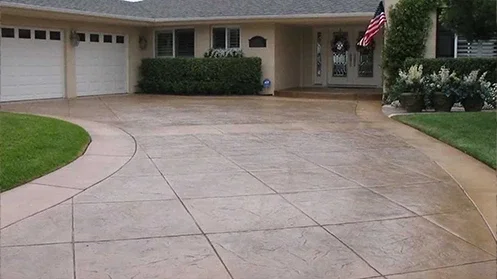
Concrete Driveway Installation in Seattle
A concrete driveway is one of the most cost-effective additions you can make to a Seattle property - properly built, it lasts 25–40 years and outperforms asphalt on durability, freeze-thaw resistance, and curb appeal. We install new driveways, replace failed ones, and level settled slabs across the greater Seattle area, with a focus on the drainage and base prep that determine how long the finished surface holds up in Pacific Northwest weather. Comparing materials? See concrete vs. asphalt driveways in Seattle.
Since 2008 we have installed driveways across King, Snohomish, and Pierce counties — from straight residential aprons in Ballard to long uphill drives in West Seattle and Bellevue. Every project includes a free on-site estimate, SDOT driveway approach permit coordination where required, and a finish chosen to match the property’s traffic and weather exposure.
Driveway installation process
We start with a site visit to evaluate grading, drainage, and access, then prepare the base, set forms, and install reinforcement before placing and finishing the concrete.
Materials and finishes
We use region-appropriate mix designs, rebar or wire mesh when needed, and finishes like broom, exposed aggregate, or stamped concrete to match your property.
Typical driveway projects
Common projects include full driveway replacement, new construction for additions, driveway aprons, and drainage improvements around garages or sidewalks.
Concrete driveway leveling and slabjacking
Sunken slabs, uneven edges, and pooling water are common signs your driveway needs leveling. Driveway leveling often uses slabjacking or foam lifting to fill voids under the slab, raise it back into place, and restore the slope so water runs away from your garage and walkway.
If you are deciding between leveling and replacement, see our concrete driveway leveling guide for what to expect.
Seattle terrain, drainage, and climate
Seattle's expansive clay soils, 37–50 inches of annual rain, and occasional freeze-thaw cycles punish driveways with inadequate base prep or poor drainage slope. We grade for positive runoff away from the garage apron, set control joints to manage seasonal movement, and specify a mix design suited to Pacific Northwest conditions. A properly detailed driveway here routinely lasts 25–40 years; one that ignores drainage often shows cracking within five.
Working on the apron or curb cut? The section between the sidewalk and the street is public right-of-way, and work there needs an SDOT Street Use permit. Our Seattle driveway approach permit guide explains when review is required and how the process works.
Driveway cost in Seattle by finish type
| Finish | Installed cost (per sq ft) | Notes |
|---|---|---|
| Broom finish | $6–$10 | Most common; reliable traction wet or dry |
| Exposed aggregate | $8–$13 | Textured surface; hides stains and tire marks well |
| Integral color | $8–$14 | Color runs throughout slab; won't wear off like surface stains |
| Stamped concrete | $10–$18 | Highest visual impact; reseal every 2–3 years in Seattle's climate |
Final cost varies with slab thickness, base removal, access, slope, and reinforcement. We confirm with an on-site estimate before any work begins.
Frequently asked questions
How much does a new concrete driveway cost in Seattle?
Pricing depends on size, base prep, slope, removal of the old surface, and finish. Most residential Seattle driveways fall in a typical range that we confirm with an on-site estimate.
Do I need a permit to replace a driveway in Seattle?
An in-kind replacement on private property needs an SDCI grading permit once it reaches 750 sq ft or more of paving (smaller replacements usually don't), and any work in the public right-of-way (the apron between the sidewalk and street) needs a Street Use permit through SDOT. We handle the coordination.
How long does a concrete driveway last in the Pacific Northwest?
A properly installed and sealed concrete driveway lasts 25–40 years in Seattle's climate. Drainage detailing and base prep matter more than mix strength for longevity here.
Can you repair a cracked driveway instead of replacing it?
Often yes. We assess crack width, depth, and whether the slab is settling. Hairline and shrinkage cracks can be sealed; structural cracks or settling slabs may need partial replacement or leveling.
What finishes are available for concrete driveways?
Standard broom finish is the most common. We also do exposed aggregate, stamped patterns, and integral color. Each has different maintenance and cost profiles.
Service areas
We handle driveway installs and replacements across King, Snohomish, and Pierce counties, including in Bellevue, Kirkland, Lynnwood, Puyallup, and Gig Harbor. See all service areas.
Related Services
Related Articles