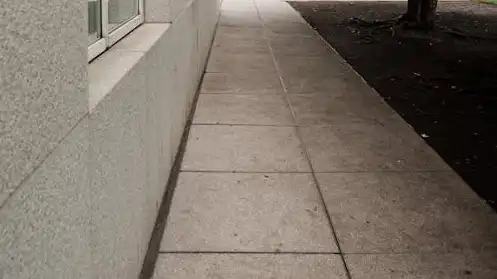
Concrete Sidewalk Repair & Replacement in Seattle
This page is about the public sidewalk: the concrete in the right-of-way between your property line and the street, usually next to a planting strip. In Seattle, the owner of the abutting property is responsible for keeping that sidewalk safe under Seattle Municipal Code Chapter 15.72, and repairs need an SDOT Street Use permit. Seattle Concrete replaces cracked, heaved and broken sidewalk panels, coordinates the permit tier that fits the job, and pours to City of Seattle standards.
Free on-site estimate · Call (206) 552-9998 or request a quote
Looking for a private walkway or garden path on your own lot instead? See concrete walkways and garden paths.
Who is responsible for the sidewalk in front of your house
Most homeowners assume the City maintains the sidewalk. In Seattle it usually doesn't. SDOT's guidance says property owners must keep the sidewalks, planting strips, roadway shoulders and unpaved alleys next to their property safe, and must pay for repairs and get the required permits. When SDOT finds an unsafe panel, it can send the owner a Street Use warning to get a sidewalk repair permit.
There are exceptions. SDOT's Sidewalk Repair Program says the City takes responsibility when a City-owned tree or a City sewer line caused the damage. Street trees that residents planted, with or without a permit, are the abutting owner's to maintain. Our guide to Seattle sidewalk repair for property owners covers responsibility, notices and the step-by-step permit process in full.
Signs a sidewalk panel needs repair
SDOT asks owners to watch for these problems:
- Cracks wide enough to leave gaps or uneven surfaces
- Sections raised or shifted by tree roots or settling
- Missing or broken pieces of concrete
- Standing water on the sidewalk after rain
A raised edge at a joint is the classic trip hazard, and it's also the most common reason a neighbor or the City flags a sidewalk. Catching it early often means a smaller repair and a simpler permit.
Which SDOT permit fits the repair
A permit is required before any sidewalk repair in the right-of-way. SDOT's Sidewalk Maintenance and Repair Guide sets the permit type by the size of the repair area:
| Repair area | Permit type |
|---|---|
| Under 100 square feet | Right-of-Way Maintenance Permit |
| 100 to under 2,000 square feet | Right-of-Way Construction Permit |
| 2,000 square feet or more | Street Improvement Permit |
After the permit is approved, the work is planned with the SDOT district inspector, and the finished sidewalk must meet City of Seattle standards, including curb ramps at street corners and proper drainage. If roots are involved, SDOT asks that an SDOT arborist evaluate the tree before work starts.
How a sidewalk replacement runs
- Site visit: measure the damaged panels, check the curb, driveway apron and adjacent panels, and note any street tree.
- Permit: apply for the SDOT permit tier that matches the repair area and schedule the work once it's issued.
- Tear-out: saw-cut at the joints and remove the broken panels for disposal.
- Tree check: where a street tree caused the damage, the exposed roots are evaluated by the City arborist and the right-of-way inspector before the new pour.
- Base and forms: regrade and compact the base, then set forms that tie into the neighboring panels, the curb and any driveway.
- Pour and finish: place the concrete, broom-finish it for traction, cut joints, and cure it before inspection and reopening.
Repair vs. full panel replacement
Panel grinding removes concrete at control joints to eliminate a trip hazard without a new pour. It's the fastest and least disruptive option. Cost: $200–$400 per joint. It suits small offsets on a panel that is otherwise intact. Partial replacement cuts out the damaged section; it works when damage is isolated to one area. Full panel replacement is best when the panel is heaved, badly cracked, or more than about 1 inch out of plane with adjacent panels. Grinding a panel that badly is only a temporary fix. Any of these in the right-of-way goes through SDOT's permit process; trip-hazard grinding is the same technique used on private walks.
Tree roots and planting strips
Tree roots are the most common cause of heaved sidewalks in Seattle neighborhoods. Street trees have to grow in a narrow strip between the curb and the walk, and their roots lift panels from below over years. The usual fix combines root work approved by the arborist, replacement panels, and sometimes a larger tree pit or a root barrier under the new slab. Cutting roots on a street tree without that review risks the tree and the permit.
Where the sidewalk meets your driveway or the corner
Sidewalk panels often tie into a driveway apron or curb cut, and a sidewalk replacement is a good time to fix a cracked approach at the same time. See the Seattle driveway approach permit guide and our driveway services for that part of the job. Work at a street corner can involve the curb ramp; ADA ramps covers accessible ramp construction.
What drives the cost
Right-of-way panel replacement in Seattle typically runs $18–$28 per square foot including permit coordination, demolition and the new pour. The number of panels, tree-root work, how the new panels tie into curbs and driveways, traffic control, and permit and inspection fees all move the price. A site visit is the only reliable way to price a specific sidewalk.
Frequently asked questions
Do I need a permit to replace a sidewalk in Seattle?
Yes, for any work in the public right-of-way. SDOT sets the permit by repair area: a Right-of-Way Maintenance Permit under 100 square feet, a Right-of-Way Construction Permit under 2,000 square feet, and a Street Improvement Permit at 2,000 square feet or more. Private walkways on your own lot are a separate matter and usually don't need one.
How much does sidewalk replacement cost in Seattle?
Right-of-way panel replacement: $18–$28/sqft including permit coordination, demolition, and new pour. Private walkways on your property: $10–$18/sqft depending on finish, site access, and whether a new base is needed.
Am I responsible for the sidewalk in front of my house?
Usually, yes. Seattle Municipal Code Chapter 15.72 makes the abutting property owner responsible for keeping the adjacent public sidewalk safe for public travel, including paying for repairs and getting the permit. SDOT can send a warning notice when it finds an unsafe sidewalk.
Will the City fix my sidewalk if a street tree caused the damage?
Only if it's a City-owned tree. SDOT says the City takes responsibility for repairs when a City-owned tree or City sewer line caused the damage. Street trees planted by residents are the abutting owner's responsibility, and an SDOT arborist should evaluate the tree before repair work starts.
How long does sidewalk replacement take?
A typical 3–5 panel section takes one to two days for demolition and new pour, after the permit is issued. The sidewalk is walkable in 3–4 days and reaches full strength at 28 days.
What causes sidewalks to heave in Seattle?
Tree root intrusion is the most common cause in Seattle neighborhoods. Roots lift panels from below over years. The fix is root work combined with panel replacement, sometimes with a larger tree pit or a root barrier under the new slab if the tree is close to the pavement.
Service areas
We handle sidewalk and walkway replacement across King, Snohomish, Pierce, and Thurston counties, including in Seattle neighborhoods, Shoreline, Burien, Tacoma, and Everett. See all service areas.
Related Services
Related Articles